


Maison Margiela transforms a Paris concert hall into a playground of white tailoring and beautiful disorder.
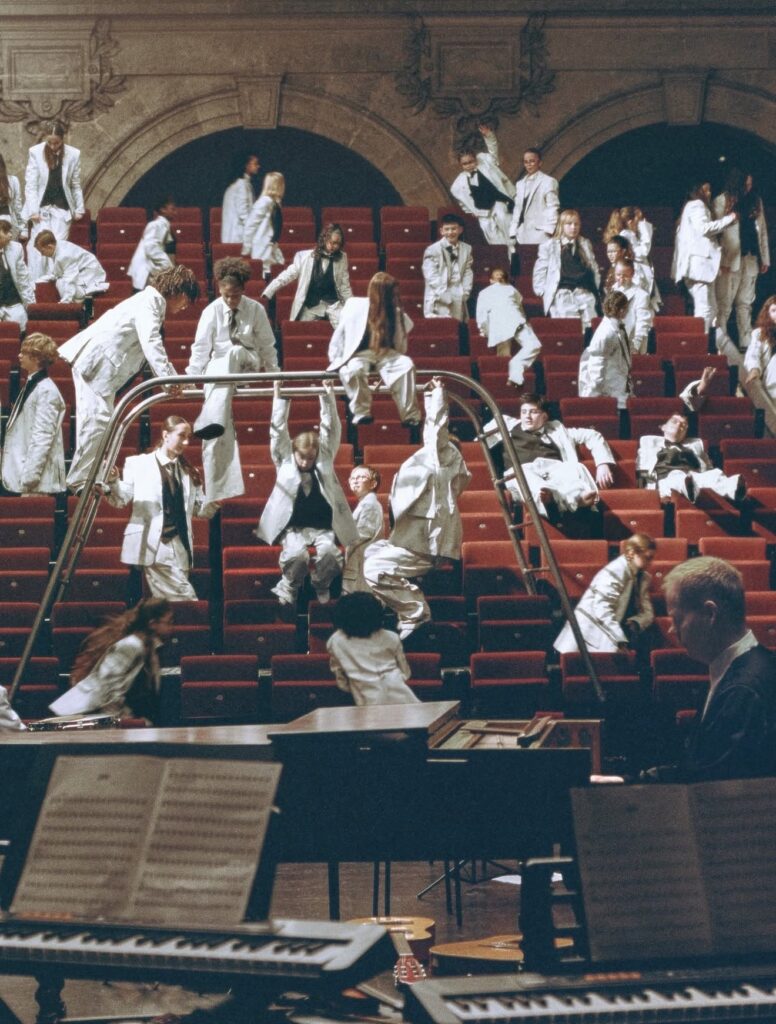
For SpringSummer 2026, Maison Margiela stages a concert that refuses to behave.
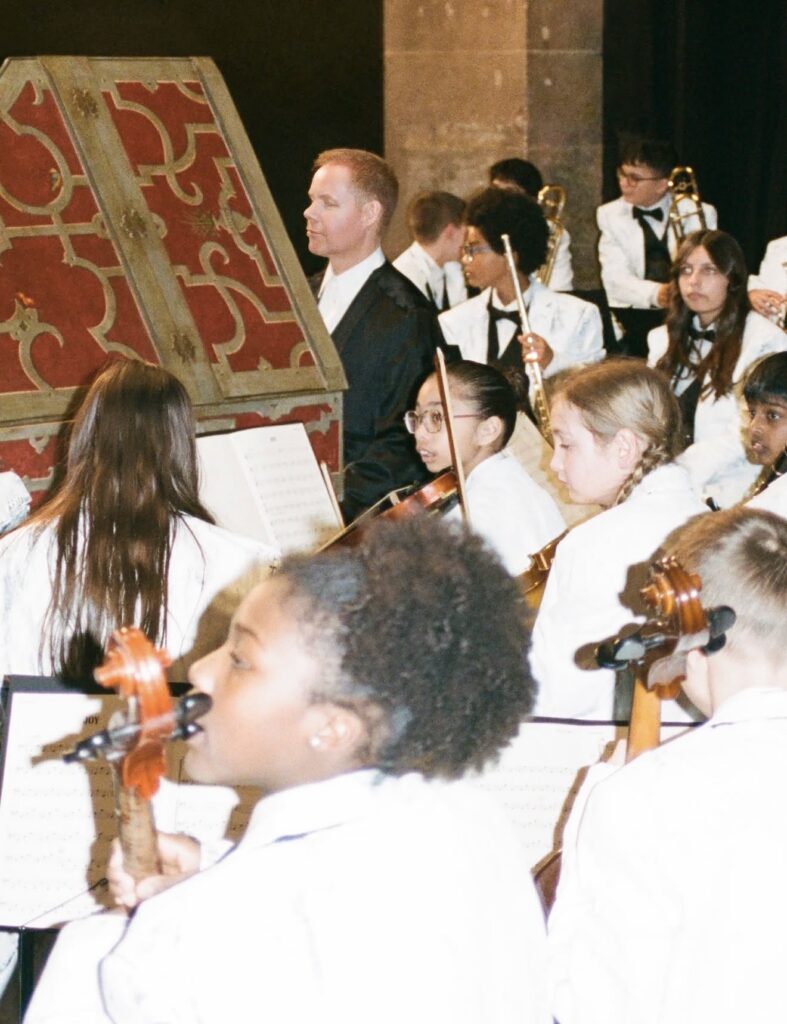
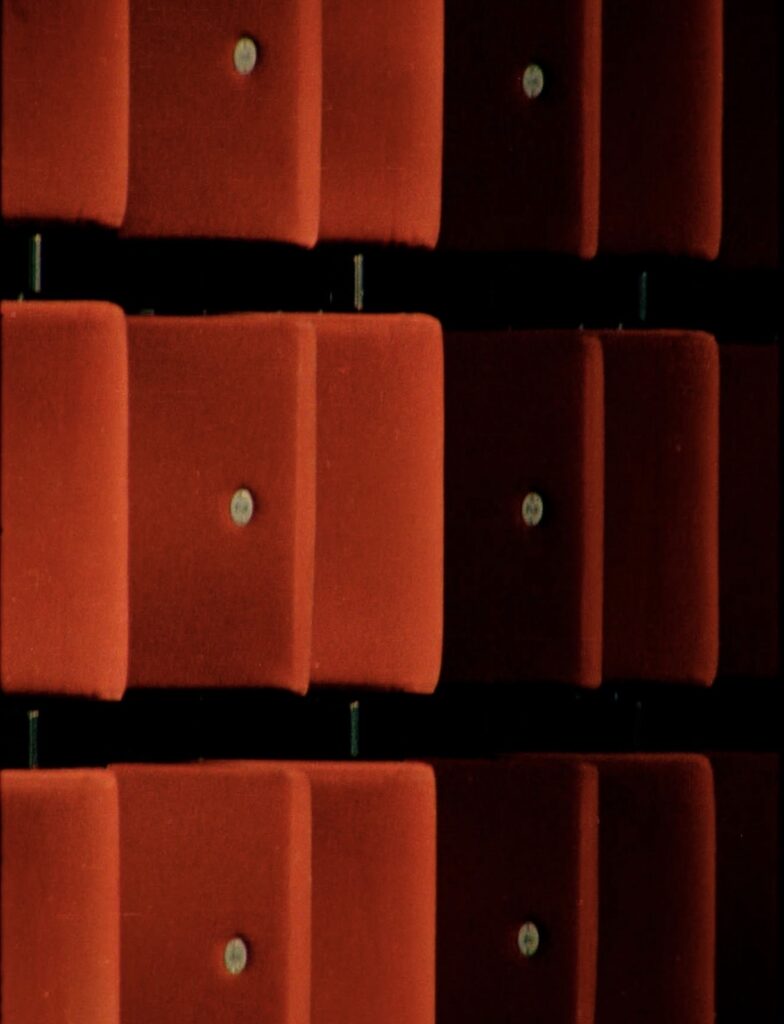
Inside a Paris concert hall, rows of velvet theater seats frame a classical orchestra setup. Sheet music sits perfectly arranged. Instruments wait for precision.
Then the room erupts.
Dozens of children dressed in white tailoring scatter across the auditorium climbing rails, sliding down aisles, swinging between rows of seats. What should be a disciplined orchestra rehearsal becomes something closer to controlled chaos.
The campaign, titled Joy, moves like a short film rather than a fashion advertisement.
At the center sits composer Max Richter, performing a score while the young ensemble surrounding him dissolves the formality of the space. The musicians shift between structure and spontaneity, mirroring the tension Margiela has always explored between construction and deconstruction.
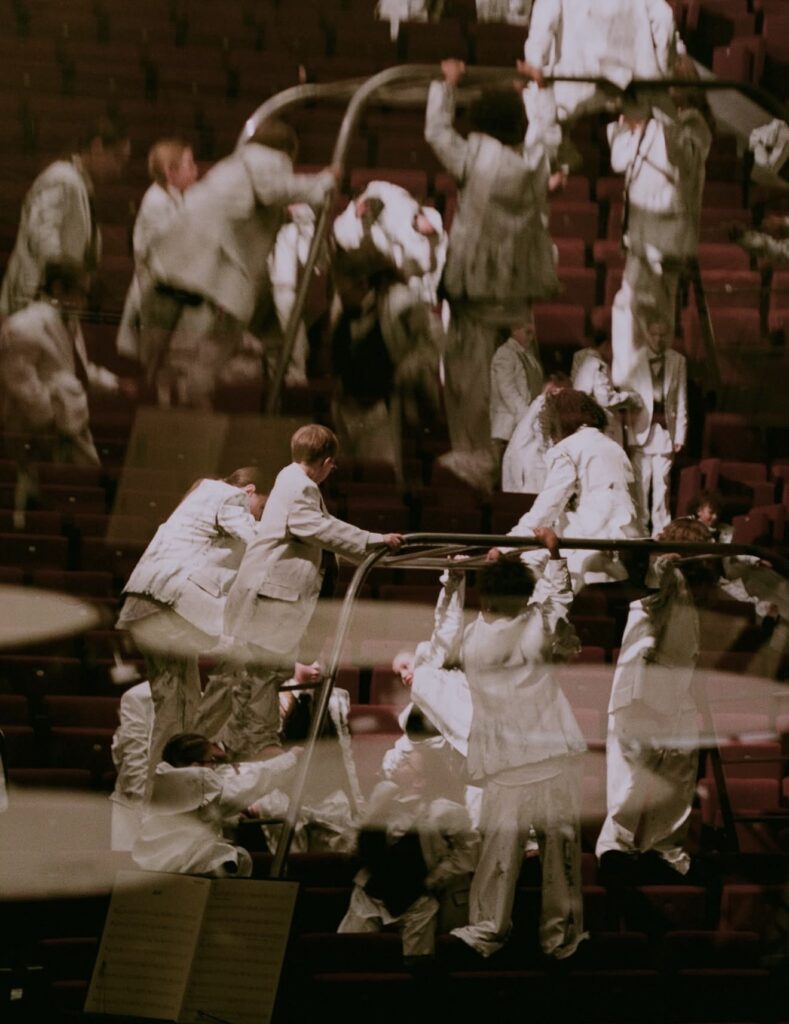

The uniforms tell the other half of the story.
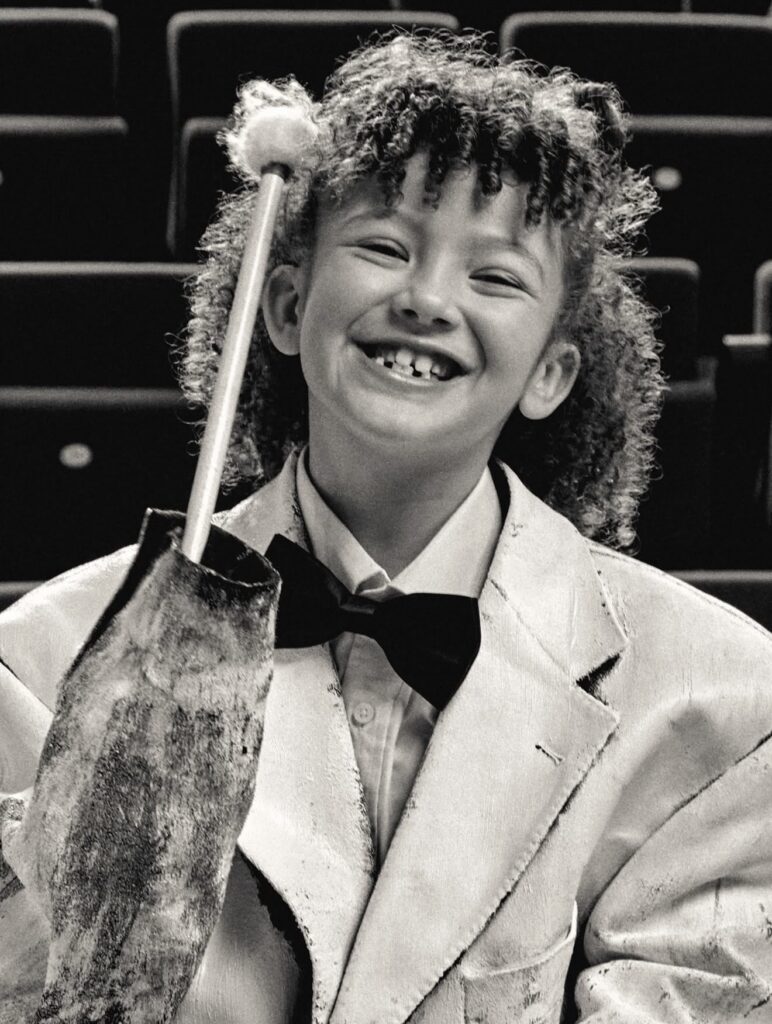
White tailoring dominates the frame jackets, trousers, waistcoats treated with Margiela’s signature Bianchettofinish, a technique where garments are painted white so the original layers reveal themselves through wear and movement. The effect feels unfinished, almost ghostlike, as if the clothing itself is mid transformation.
Accessories quietly introduce new pieces from the house as well, including the return of Margiela’s architectural heel less footwear and a structured leather bag built through thermo molded construction.
But the campaign isn’t about product.
It’s about disruption.

A concert hall represents order. Rules. Tradition.
Children represent instinct. Movement. Noise.
When the two collide, the result is something Margiela understands well beauty inside disorder.
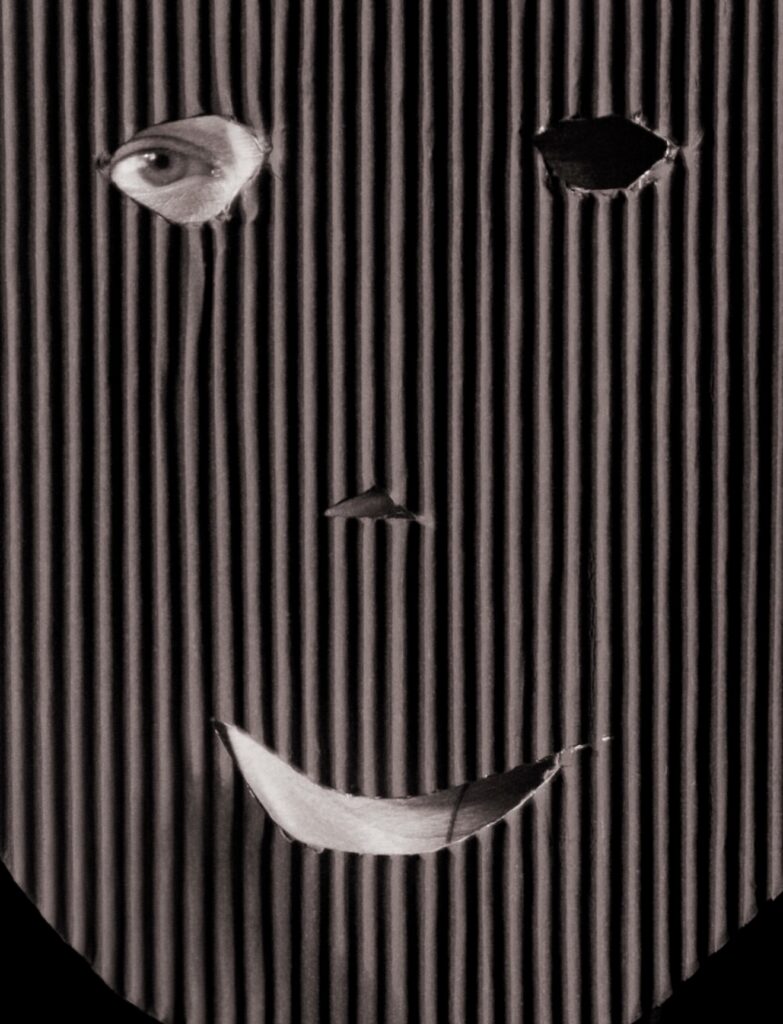
The orchestra loses control.
And that’s exactly when the composition begins.
by Pines Studios
Leave a Reply