

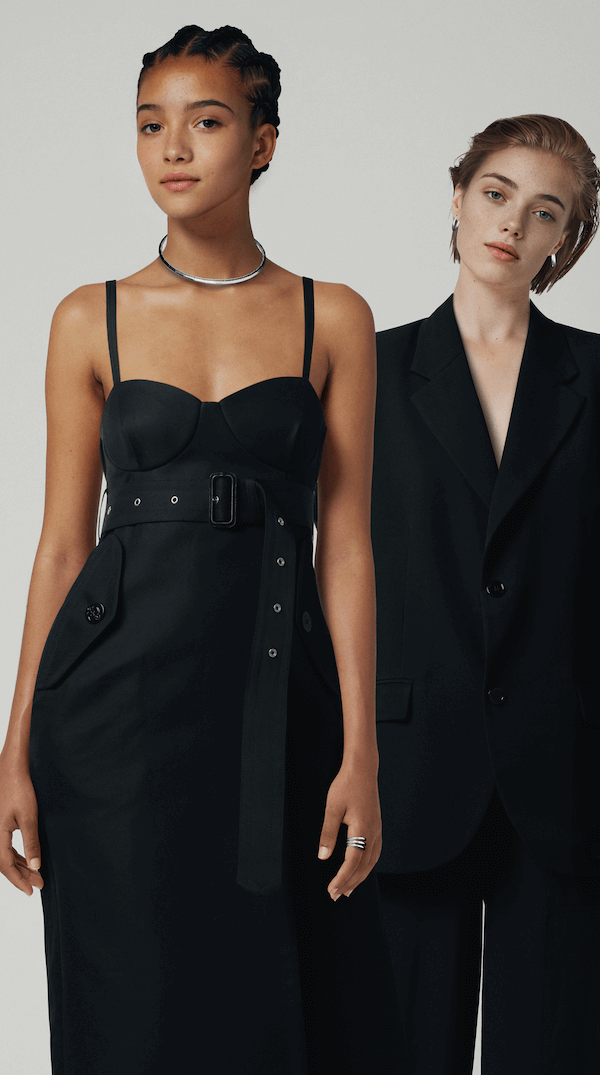
The 2023 annual Cannes film festival may have officially wrapped, but a number of noteworthy happenings have kept whisperings of the days-long affair afloat. Amid a domino effect of layoffs in the fashion editorial space, some indicating a pivot toward potentially employing artificial intelligence (AI), the industry seems to be prioritizing technology over human creativity. In recent years, there have been AI-generated magazine covers, AI models, and even the first-ever AI fashion week. While these achievements are impressive, they also raise concerns among countless creatives about the potential marginalization of their careers and human identity, and the reversal of the little progress the industry has made in relation to ethnic diversity altogether.
Reflection, a fundamental human ability, drives our capacity to generate new ideas and emotions, making it a crucial inspiration pillar in any creative field. AI, on the other hand, can only build externally, lacking an internal perspective. Web 3.0, characterized by NFTs, AI, and cryptocurrency, represents the merging of Web 2.0’s social projection of online identities with AI and crypto, blurring the boundaries between the two. In her essay “The I in Internet,” Jia Tolentino explores this merger, shedding light on the reality that one of the primary dangers of the increasing presence of AI models and AI-generated images is the immediate lack of representation across diverse identities, which aligns with how the fashion industry seems to employ these tools.
Safiya Noble’s book, “The Algorithms of Oppression,” extensively examines the foundation of racial bias in algorithmic programming, and the biases of the individuals behind them. While the argument for diverse representation in fashion continues to be fought on a larger socio-political stage, the pervasive presence of digital lenses has distorted perceptions of normality, fueling a generation’s compulsion to be online, surpassing the need for unfiltered, face-to-face interactions. Ana Lola Roman, in her “10 Commandments of the Avatarization of Myself,” acknowledges the self-distortion caused by filters, the result oftentimes identity fragmentation.

Mica Le John, the founder of the creative Avatar platform Idoru World, argues that creating an AI model to replace a human model is inherently exclusionary and likely to exacerbate the industry’s systemic issues by further excluding marginalized individuals. Rather than a cautionary warning for the future, examples already exist within the industry to support the notion. For instance, a 2019 Calvin Klein campaign video featured Bella Hadid and the AI-produced Instagram influencer Lil Miquela sharing a kiss. Ironically, one of the models in the video recited the line “Life is about opening doors,” yet the campaign failed to embrace the rarity of two actual queer women kissing in a high-end fashion editorial, settling for a faint digital representation instead.
Similarly, in 2023, Levis announced plans to test AI models that would “supplement” existing models, raising questions about the fashion industry’s reluctance to hire the abundant pool of diverse models available. While some businesses support this approach as a cost-cutting measure, the decision to “employ” an AI curve model instead of a human counterpart is a thinly veiled argument.

This isn’t to say that ethical practices and AI-generated art can’t coexist. During the height of the pandemic, when live presentations were at a near standstill, Black-owned brand Hanifa successfully showcased an entirely digital show using seemingly floating garments parading down a runway sans models. Yet, the show featured body types more realistic than many industry mannequins. However, without careful monitoring, the influx of digital content poses the risk of solidifying cultural biases and further entrenching issues related to identity representation, which Le John points out may very well befaults of mass culture in general, but are greatly amplified in reach and severity by technology. This highlights the need to focus on evolving our cultural standards alongside technological innovation.

Ultimately, it would be remiss not to acknowledge that the rapid expansion of AI in fashion could indicate a democratization of digital tools for artists outside the physical realm, providing an equalizing opportunity akin to the social media boom. However, it remains crucial to set the precedent for the ethical use of AI as no more than a supplement to human talent, not a mere band-aid to cover up its long-standing exclusionary practices.
Leave a Reply