

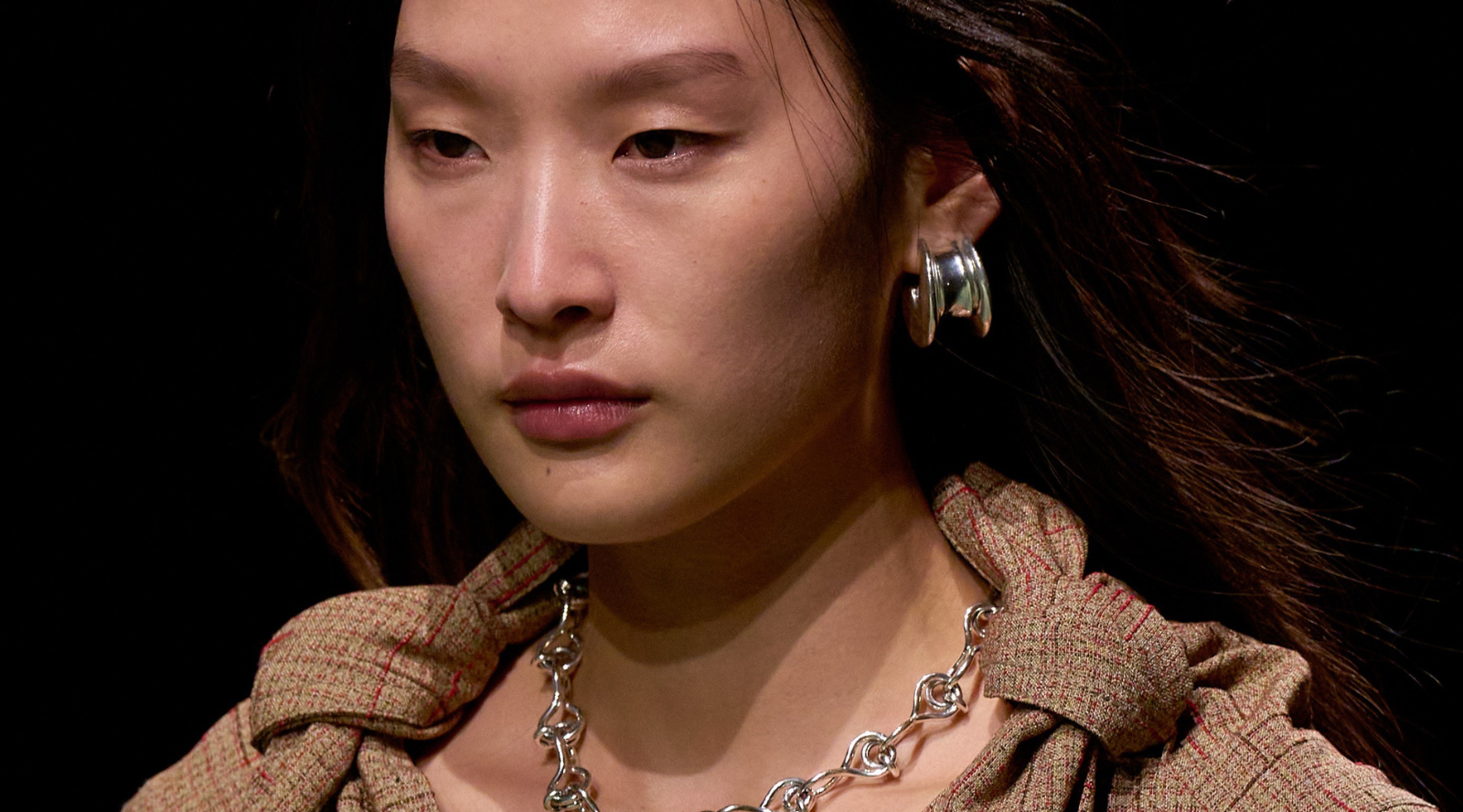
The past few months in fashion have been but an exodus of sorts of tenured creative directors from their posts at the helms of their respective appointed luxury houses — Namely, Alessandro Michele’s departure from the head of Gucci, Jeremy Scott’s from Moschino, and Serhat Isik’s and Benjamin A. Huseby’s from Trussardi. Without a heralded, and perhaps too celebrity-driven, name at the helm of a storied luxury house, critics and audiences alike are wondering what exactly can make a brand, in both its community and design, organically successful without relying on the now oversaturated pleas for virality and big budget ambassadorships. Amongst this celebrity Creative Director exodus and decline in luxury one-off collaboration drops, many are wondering what successfully contributes to building a successfully authentic brand identity? Moreover, how does this shifting landscape affect those who work in and around fashion and the way that non-industry patrons choose to consume their media du-jour?
In recent examples, some of the reactions from industry professionals and enthusiasts alike to Gucci’s Fall/Winter 2023 season (its womenswear collection especially caused quite the stir on all sides of the fashion polycule) indicated a widespread appreciation for (relatively) stripped down collections rooted in design choices that felt motivated first by brand identity. Designed, sans creative director, by an internal team on the heels of Michele’s departure, the presentation unveils a new Gucci identity that, while a bit confusing at some points, more importantly distanced itself from the former reign of floral romance that was the brand under Michele. While the former Gucci woman was overtly eccentric and romantic, many agreed the new Gucci woman was a breath of fresh air because she represented the present day consumer — one who is loosely thrown together, and on-the-go, not necessarily one who dons the Oscar-ready gowns of Michele’s era.

In the larger cultural zeitgeist, this collective shift manifests in more ways than one, perhaps the most prominent of which being the change in attitude toward social media post-pandemic. By and large, users are favoring a more authentic and casual experience online over the hyper-curated nature of the late 2010s. The result? — The explosion of TikTok (the antithesis of a polished and curated online presence), BeReal, the app that empowers its users to capture a moment as-is, the rise of the weird-girl aesthetic, a Gen Z-heralded style of dress wherein nothing matches (intentionally so), and the return of indie sleaze, a 2010s era characterized by a seemingly effortlessly cool undoness. The industry saw a similar theme sweep the runways as well, emphasizing a new It-girl who’s shrouded in a bit of pre-internet-era anonymity, or she at least has a private instagram. Perhaps, then, brands themselves can take a bit of inspiration from the woman they create — Writer Scarlett Newman shares the idea with Beyond the Pines that while virality is an incredibly obvious way for brands to make money, and social media isn’t going anywhere, perhaps “if a brand can rearrange its priorities to not be so outwardly-focused, the values, authenticity, and output can realign, and we can return to great art.”
The aftermath of the aforementioned Gucci collection’s debut was just as telling of the current climate as the collection itself. Generally, when a megastar designer leaves a brand, the biggest controversy around the brand’s succeeding collection is, well, the collection itself. However, in the case of Gucci’s first show post-Michele, there was a bigger reaction to the arrangement of the show’s seated audience than the clothes —The runway, which was staged like a ‘70s conversation pit, featured an inner circle of seats where mostly traditional fashion influencers sat. It’s worth noting, of course, that dividing a runway seating chart into press, buyers, VIP clients, and celebrities isn’t new, (an assistant buyer probably won’t be seated in front of ASAP Rocky, and Anna Wintour will likely be seated front row with the swiftest exit plan), however, over on Twitter, veteran writer and fashion critic Vanessa Friedman shared a photo of the set, and poked fun at the implication of an “inner circle” for those who have successfully capitalized on posting photos of themselves as virtual mannequins. What Friedman pointed out with the tweet was brand’s emphasis on influencer and celebrity relations, but it’s the internet’s reaction to her tongue and cheek that reveals so much more about the remainder of the industry’s yearning for authenticity. There was a general consensus in the replies and surrounding discourse that the tone of the post was “bitter,” indicating that many OG-influencers-turned-industry veterans are still fighting to prove their worth in fashion. While many took this viral comment to offense, Friedman most likely intended to point to how influencer marketing often feels inorganic, much like an incredibly awkward celebrity cameo in a superbowl commercial — You know they’re only there because they’re getting paid (or benefiting in some way).
The transition of power in fashion’s media is an ever-evolving animal that seems to only change when the method of storytelling does as well. Editors were replaced by bloggers, bloggers by influencers, and influencers now by what? In a conversation with BTP, Commentator Rian Phin (@thatadult), links the fall of the traditional Instagram influencer to general overconsumption. Even with fashion’s recent attempt at branding its media as “de-influencing,” the shopping culture that sky-rocketed so many people’s fashion careers over the last decade is, in the end, responsible for its own role in consumer fatigue. Phin adds that the proliferation of influencers has “made a lot of audiences uncomfortable with the ambiguity of what ‘authenticity’ even means anymore.” Ironically, the more transparent an influencer tries to be, the more likely they are to be called out for being “out of touch.” The consensus seems to be that one can’t quite critique the system while actively enabling it for personal gain.
Newman explains, “It’s not a secret that the relationships between influencers and brands are super transactional. And I think that’s because that type of relationship is also very transparent, the luster doesn’t exist. We know that both parties are benefiting greatly from whatever this is, but where is the story?” With the expansion of access and content that new social media platforms now bring, the audience also craves an expanded idea of storytelling from the ground up – the idea, to the sketch, to the production, to the show.

This is not all to say that the industry is a looming cloud of aloof demi-celebrities and failing brands. There are many, usually smaller, non-conglomerate designers who are accomplishing this so-called white whale of authenticity. Take, for example, Luar, which now holds the coveted closing slot at NYFW, yet still opts against gifting major celebrities its now famous “Ana Bag,” or as Phin notes, brands such as Helena Eisenhart, Telfar, and Heaven, all of whom connect with local artisans and communities to collectively bring together a vision driven by organic artistic passion. It seems the current climate no longer leaves room for brands interested only in an overtly transactional relationship with its supporters, and perhaps, for the first time in years, “luxury lifestyle” brands will be forced to evaluate what they can offer besides a sale.
Leave a Reply