


Supplied with a comprehensive glimpse into the seductive landscape of style, the fashion designers recently unveiled for the upcoming year was a rare treat. Across New York, London, Milan, and Paris, designers unveiled collections like they do twice (or thrice, or four times) a year, every year. Luxury and streetwear enmesh and intertwine, inclusivity reigns supreme, and classic motifs are subverted and re-established in tandem. From innovative collaborations to tactile designs, the tailoring artists put on display visions and stories that teach us what to wear and show us what we have yet to discover. Let’s dive in to consider these new vestiges of beauty and study the consumer shifts in aesthetic that define culture.
Body Becomes the Canvas and Transparency is on the Rise as Designers Embrace Sheer Fabrics and Treatments
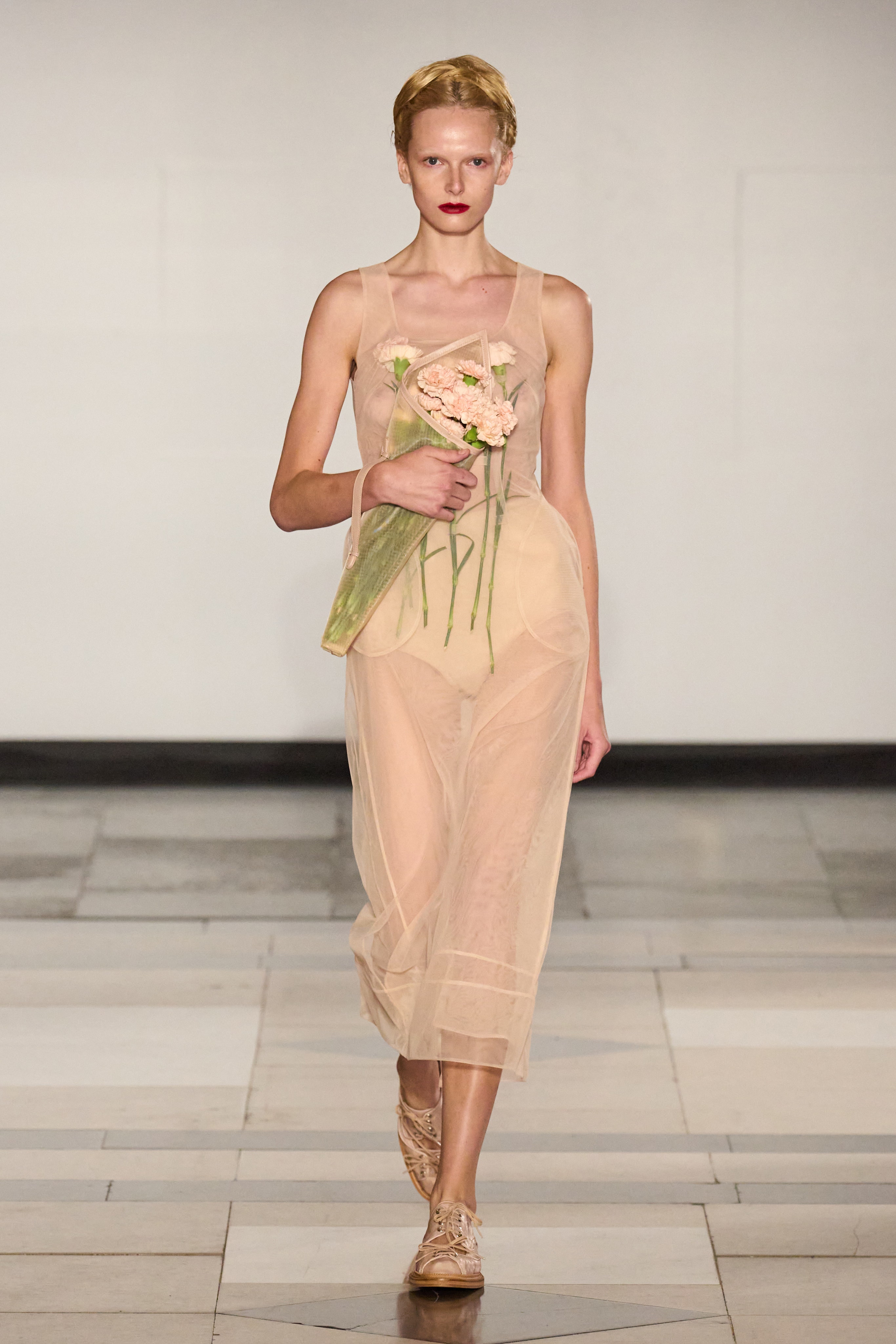
This season, sheer and see-through fabrics took center stage, with designers across the board using transparency to highlight the natural beauty of the body. Simone Rocha and Alain Paul embraced the simplicity of the see-through quality with a more straightforward application while designers like Di Petsa and Victoria Beckham took more particular approaches, manipulating their fabrics into bold drapery in their respective styles and blending elegance with sensuality. AVAVAV and Fiorucci added an element of playfulness with their more avant garde and exaggerated designs, using transparency to push boundaries— creating illusions and highlighting playfulness.
At Vivienne Westwood, models strutted in delicate but understated knit ensembles that were provocative with an ease. At Alaïa, monotone sheer looks blurred the line between clothing and body, allowing the human form to become part of the design itself. Grace Ling layered barely-there mesh to create gowns that both sectioned and accentuated the body. The emphasis on transparency reflected a broader exploration of body positivity and self-expression. This sheer trend underscores the ongoing evolution in how designers engage with the body, turning it into a canvas for self-expression and elevating the act of wearing as well as seeing into a more intimate, personal experience.
Classic Tweed Finds New Life and Belted Construction Gains Momentum As the Season Pays Homage to Classic Chanel and Margiela Motifs
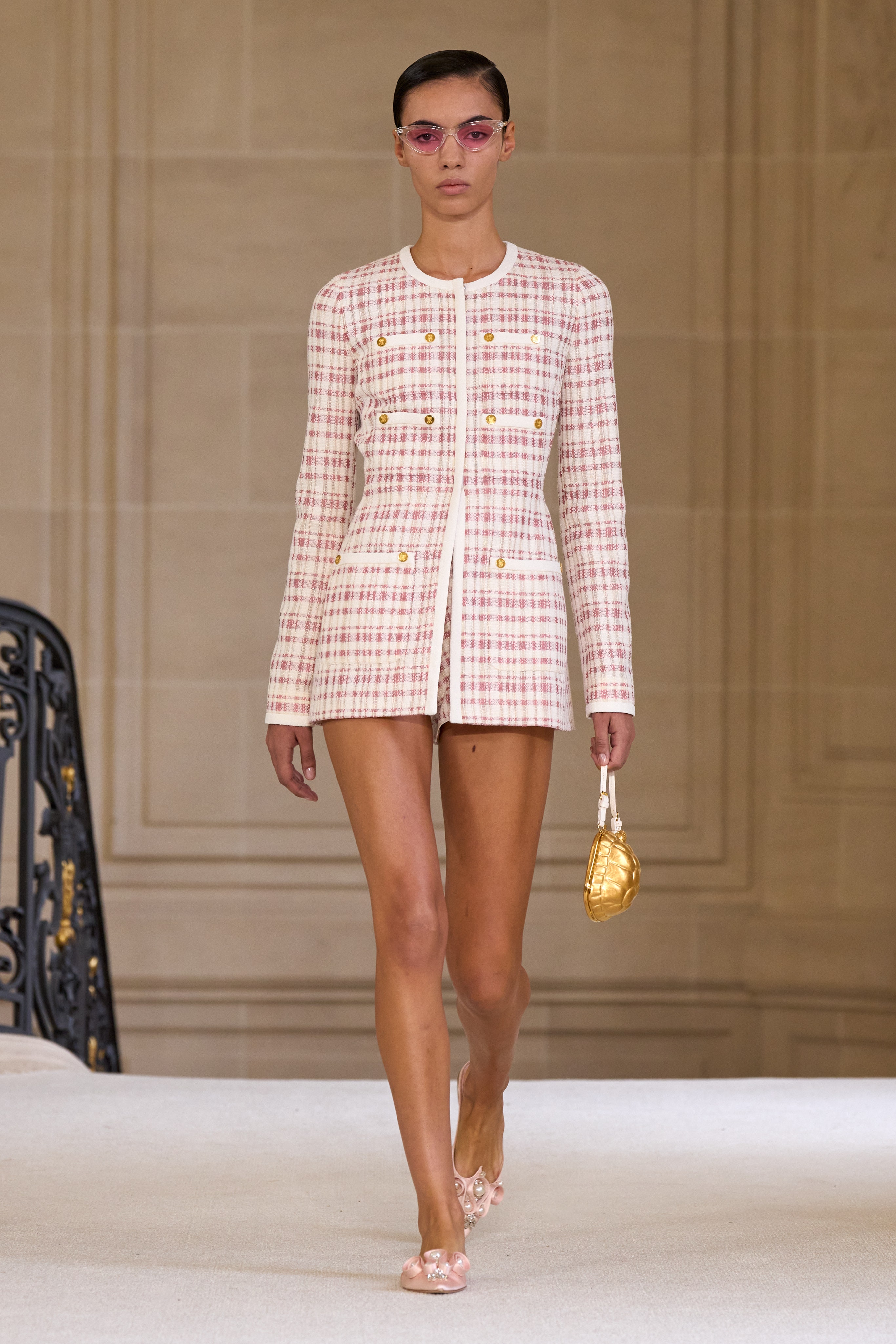
The classic Chanel tweed jacket received fresh interpretations from several designers this season, with Anna Sui, Giambattista Valli, and Celine leading the charge. While tweed has long been a symbol of timeless elegance, Anna Sui brought the traditional tweed jacket into a more whimsical and casual sphere. At Giambattista Valli, the tweed jacket was given a feminine and traditional treatment, while Hedi Slimane at Celine brought a minimalist and polished approach in his celebration of vintage French icons, presenting the iconic skirt suit as versatile, adaptable, and timeless.
At the same time, Maison margiela’s influence could not be ignored: sunburnt accessorizing and printing at Di Petsa were reminiscent of Margiela’s debut show while “belted” dresses echoed his belt creations from 2006. Designers like Who Decides War and Noir Kei Ninomiya used belts for full construction, creating a bandage dress and statement jacket. Hodakova took a more minimal approach; the LVMH prize winner Ellen Hodakova Larsson pieced together a white leather belt dress for her entirely sustainable collection. Ludovic de Saint Sernin gave the belted look a darker and edgier twist, with eyelets and leather lacing adding structure and sensuality. Luis de Javier showed a maxi skirt deconstructed with looping strips of white snakeskin while Balmain illuminated a structured dress with white, beaded bands— trimmed with chain piping, of course.
In the Aftermath of Demure, Labels like Luar, Alaia, and Rick Owens Elevate Hoods for a Silhouette that Makes a Statement
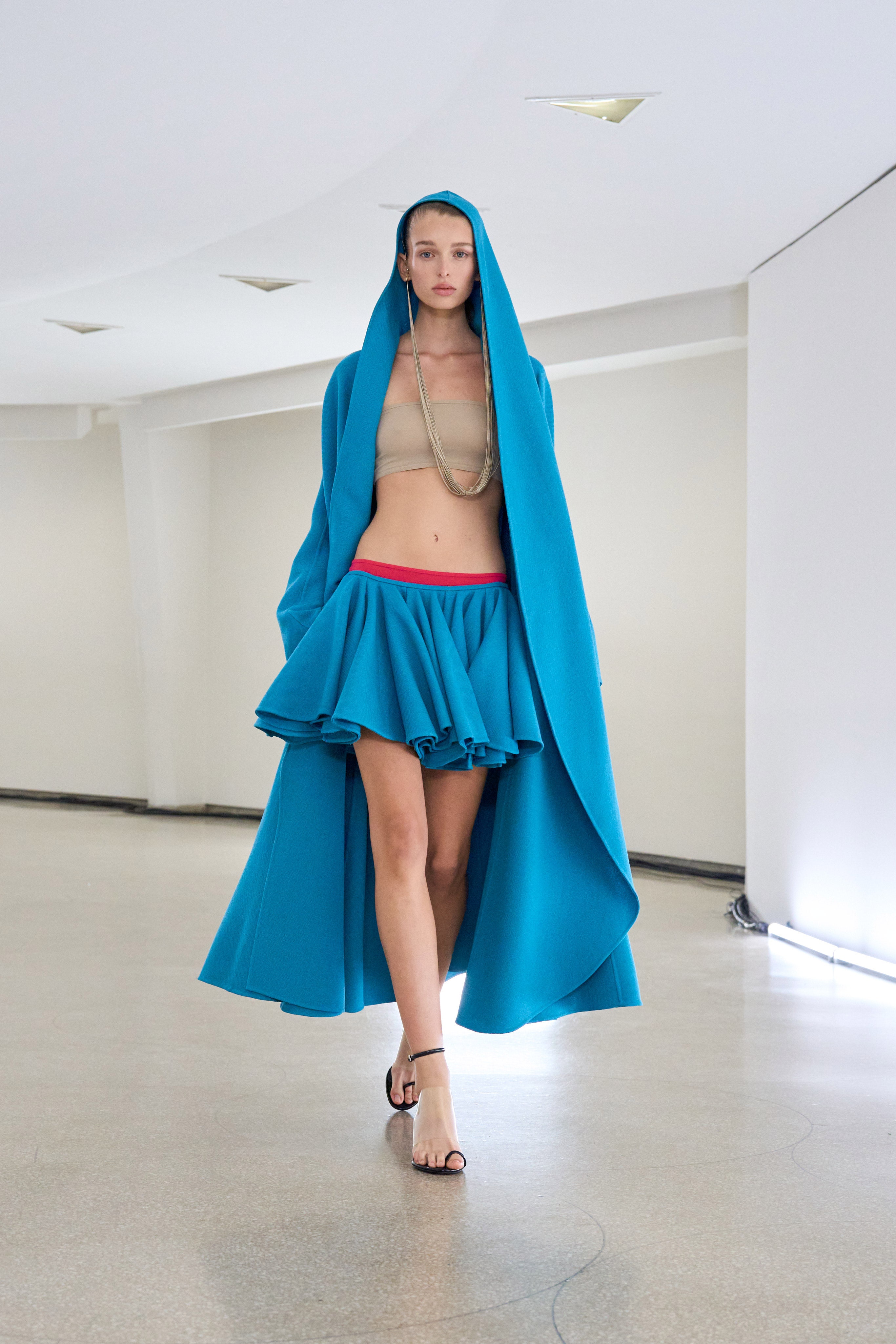
Head coverings emerged as a pronounced trend this season, whether as a nod to the casual hoodie or referencing religion and culture. At Luar, Alaïa, and Off-White, the showcased hoods were a beyond-sleek version of their usual sweatsuit ancestors; nearly unrecognizable and thoroughly chic. At Rick Owens and Giambattista Valli, the veiled effect proved that covering the head has an undeniably substantial artistic impact. Issey Miyake’s model, cloaked in an all-white shroud, took on an almost sculptural quality with their face as well as their head and body all covered at once. These pieces speak to a broader exploration of art and expression, with head coverings being both cultural symbols and statements of personal identity.
In the Wake of the Elevated Streetwear Generation, A Tsunami of Collaborations Overtakes the Luxury Brand Space
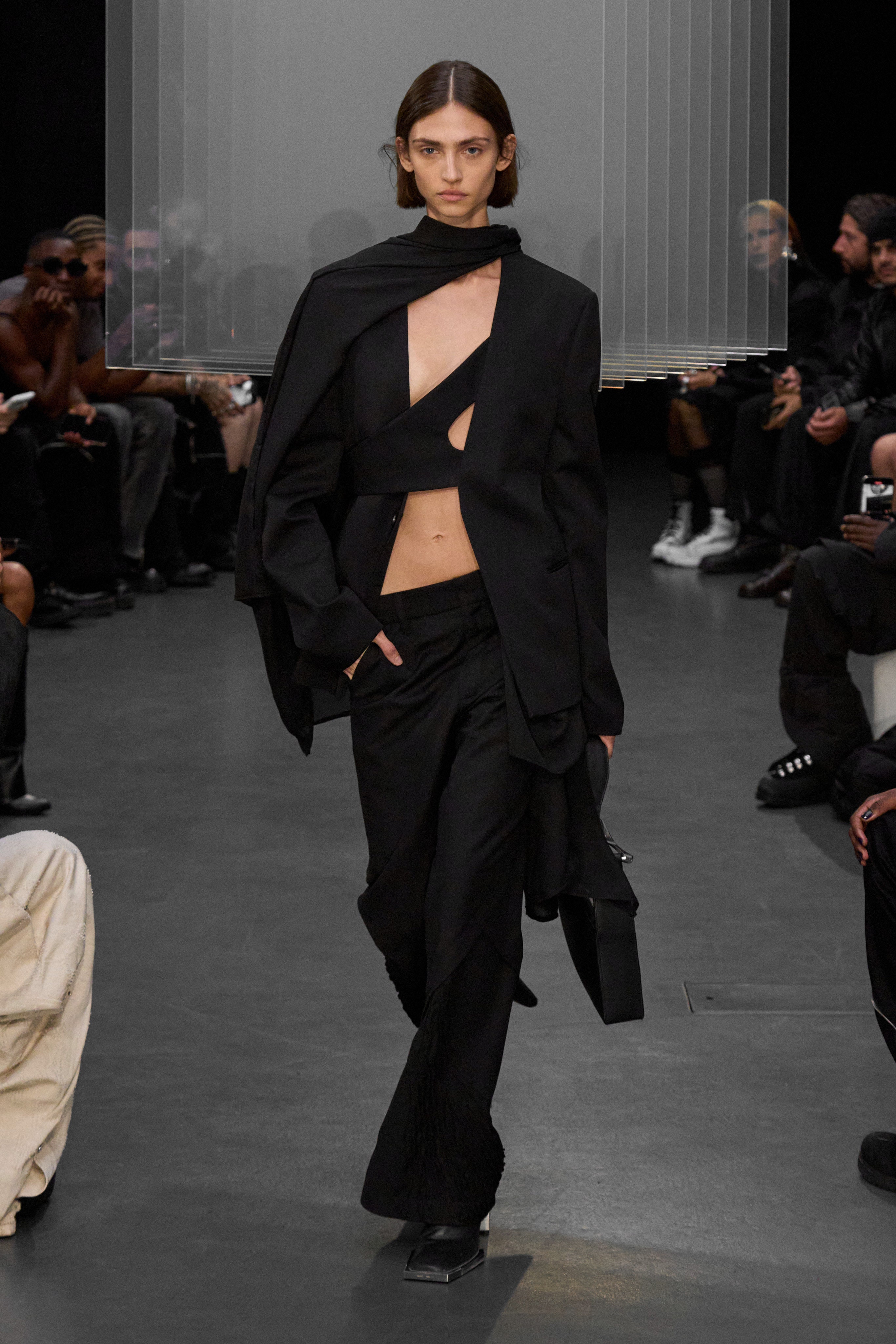
Elevated streetwear has been swept up by a wave of high-profile collaborations, and it shows no signs of slowing down. The Martine Rose x Supreme and Vivienne Westwood x PALACE capsule collections epitomized partnerships that marry high fashion and street culture. Collaborations like these aim to emphasize where the two brands’ values intersect, resulting in the formulation of unique fusions— London culture, unexpected classics, and menswear for Martine x Supreme and punk rebellion, skate aesthetics, and haute couture for Vivienne x Palace. Furthermore, brands like Loro Piana collaborating with New Balance re-set the tone for how ultra-high-end brands could reach across stratospheres to tap into the world of the accessible and the practical, united by a focus on functional and long-lasting products.
Collaborations like Heliot Emil x Alpinestars and Cecilie Bahnsen x North Face further demonstrated how luxury brands are catering to an increasingly fashion-conscious activewear consumer. Japanese brand Beams redefined Crocs, adding a miniature leather jacket facade to the classic sandal. Nike x Supreme merged Nike’s performance-driven ethos with Supreme’s edgy, street-savvy branding while Supreme and Thrasher collided to blend skate culture with Supreme’s flair for exclusivity. Nigo, the visionary behind A Bathing Ape and certified godfather of streetwear, for Nike was a dream come true for streetwear aficionados. Bringing his distinctive aesthetic of retro vibes and contemporary streetwear cool, collaborations such as his continue to shape the landscape of street fashion, proving that when two brands come together, the hype— and creativity— soars.
Leadership Shifts and Strategic Departures Signal a Changing Landscape
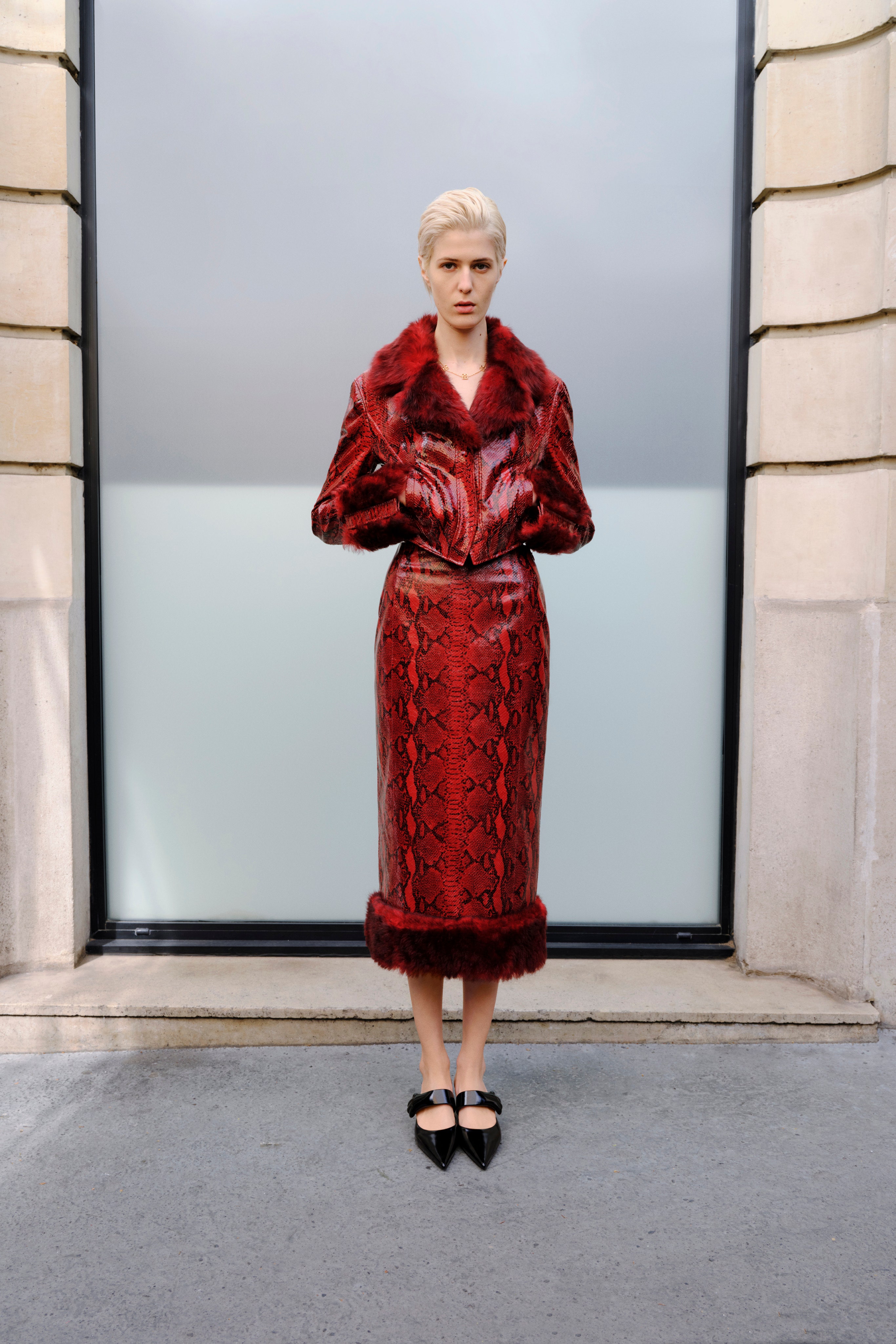
Sarah Burton’s appointment as creative director at Givenchy marked a significant moment for the brand, as Burton is expected to bring a fresh vision and practiced hand, tenured by her celebrated work for Alexander McQueen. Her appointment also marks a rare female head at a heritage brand. Other notable moves included Haida Ackermann taking the helm at Tom Ford— an exciting succession as Ackermann is known for his innovative approach to tailoring. James Jebbia’s new role at Ralph Lauren indicated a strategic change aiming towards broadening Ralph Lauren’s appeal across generations and fashion sectors. Meanwhile, Glenn Martens’ departure from Y/Project left many speculating about the brand and Martens’ future direction. These moves underscore how the business of fashion is constantly evolving, with new eyes and hands bringing fresh perspectives to established houses. The industry also saw shake-ups with LVMH’s decision to sell Off-White, signaling a shift in the luxury conglomerate’s strategies.
Thus Concludes This September 2024 Filled with Tradition, Innovation, and Key Industry Shifts
Recent shows highlighted the industry’s deepening connection to both heritage and innovation. Industry adjustrments and leadership changes suggest a fashion world on the cusp of exciting transformations, with creativity and business evolving interdependently. Through sheer fabrics, age-inclusive casting, head coverings, and the reinvention of classic silhouettes, the collections celebrated what we love and gave us new and old things to excite. Designers paid homage to the icons of fashion history while simultaneously exploring new ways to express identity, inclusivity, and craftsmanship.
Leave a Reply