

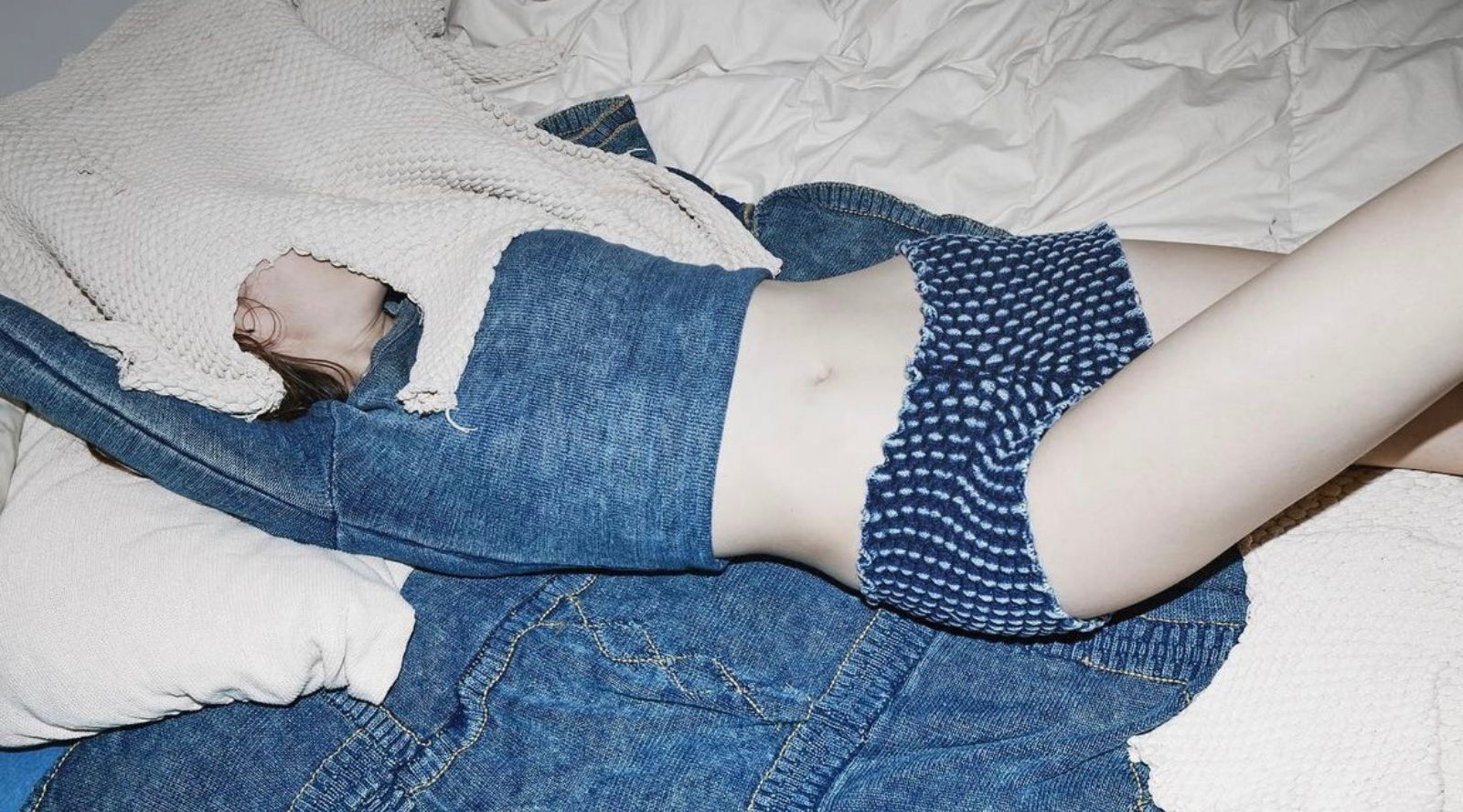
When it comes to fashion, the journey from idea to execution can be as intricate and textured as the fabrics that grace the skin and compose the garments. For one LA-based fashion designer, this journey began not with a traditional path through design school but with a passion for creation sparked in unexpected places. From the snowy slopes of Utah to the bustling streets of Los Angeles, Eleanore Guthrie has crafted a brand of knitted denim that reflects her unique vision but also challenges the conventions of the clothing industry: Knorts.
Born and raised in Pasadena, Los Angeles was always home for Eleanore, but it wasn’t where her story began— her path to building a fashion brand began with a different first love, a passion that consumed her during her college years in Utah. “I used to really be into snowboarding,” she recalls. “I had so much fun, it was like winter camp… I wanted to be a pro. “ It was in the world of snowboarding that she first became captivated by fashion. The world of snowboarding has its own distinct culture, characterized by articulated silhouettes, dynamic utility, and an undeniable style. She found herself drawn into the aesthetics of the scene, altering her snowboard pants to create shapes that she found visually appealing. “I loved it,” she explains. “I’d alter my snowboarding pants to achieve a certain silhouette. I was like, I think maybe I like fashion… Let me see what I can do with that.”

The leap from snowboarding to brand development may seem like a giant one, but for her, it was a retrospectively natural progression. “Growing up, I always wanted a business,” Eleanore confesses. She had chosen to study accounting— a strategic choice, driven by her early entrepreneurial ambition. As college was coming to an end and a professional snowboarding career had failed to materialize, Guthrie was struggling to find a job in her field, a challenge compounded by her self-described difficulties in job interviews. “I’m a really bad interviewer,” she admits with a laugh. “So bad that I was like, I guess I have to go back home.”
She began by working with hand loomers, creating her own genre of fabric by putting indigo dyed thread (traditionally woven into denim) into the knitting process instead. Since its inception Knorts has utilized the unique qualities of knitwear by making clothing the fully fashioned way. This means that each separate piece of material making up the finished garment is knitted to that exact shape instead of being cut from a rectangular piece of woven cloth. Eleanore’s first collection manifested this way in 2016, with simple designs that highlighted the unique textures and patterns she could achieve with her kind of denim.
Her brand began to gain traction, particularly with her signature flare pants—a letter to a first love. It wasn’t as easy to get to the mountain as it was in Utah. “Thinking about it, looking at it, seeing it can really depress me,” Eleanore recounts. “I had to give it up to pursue my brand.” The pants were directly inspired by her love of snowboarding. They hugged the legs and flared out at the ankles, mimicking the silhouette of snowboard pants when worn over boots. This design quickly became a hallmark of her brand, embodying the blend of functionality and style that had drawn her to fashion in the first place.
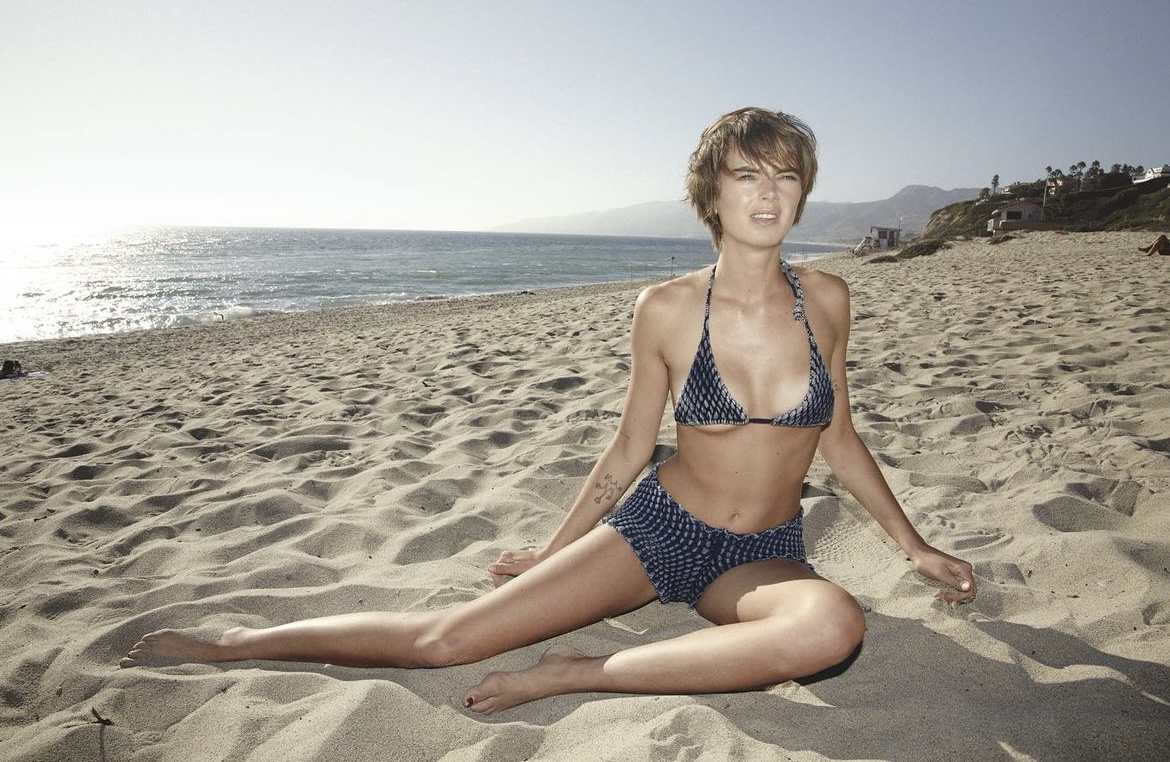
How does a person go from the creation of a product to getting people to buy that product, to then living off of the money from selling that product? “It’s been a mystery I’ve wanted to solve,” Eleanore says. “As my brand was growing, I was like— I might actually be able to figure it out.” As her label grew, so did her ambition. She realized that in order to scale her business, she needed to make a bold decision: she purchased industrial knitting machines and set up a live-work studio space in her home.
“I was really overwhelmed with how fast my business was growing,” she reflects, “So I got one machine […] and another machine one about a year later.” The machines, which she had transported into her garage with the help of a specialized knit machine mover, allowed greater control over the production process. The machines break and need troubleshooting often, but Guthrie even has a third spare machine just for parts. “I’m an expert mechanic now,” she beams.
The decision to bring production in-house maintained the integrity of her design language— the yarn she used, particularly the indigo-dyed yarn, was notorious for a phenomenon known as “crocking,” where the dye would rub off onto the machines. Most local factories refused to work with her yarns for this reason, but she knew that the color transfer was manageable. By keeping production in-house, she could continue using the materials she loved without compromising her vision. “I often switch,” she relays, “between my cream and indigo.”
Despite the challenges of learning to operate the industrial knitting machines—a process she described as a “fun nightmare”—she found that this move paid off in more ways than one. Not only could she produce exactly what she wanted and oversee the entire process, she also had more flexibility to take on custom orders and last-minute requests, something that wouldn’t have been possible if she relied on external factories. This ability to be nimble and responsive became a key advantage as her brand continued to grow. “It definitely was a lot to learn,” she explains. “But now I can move faster.”
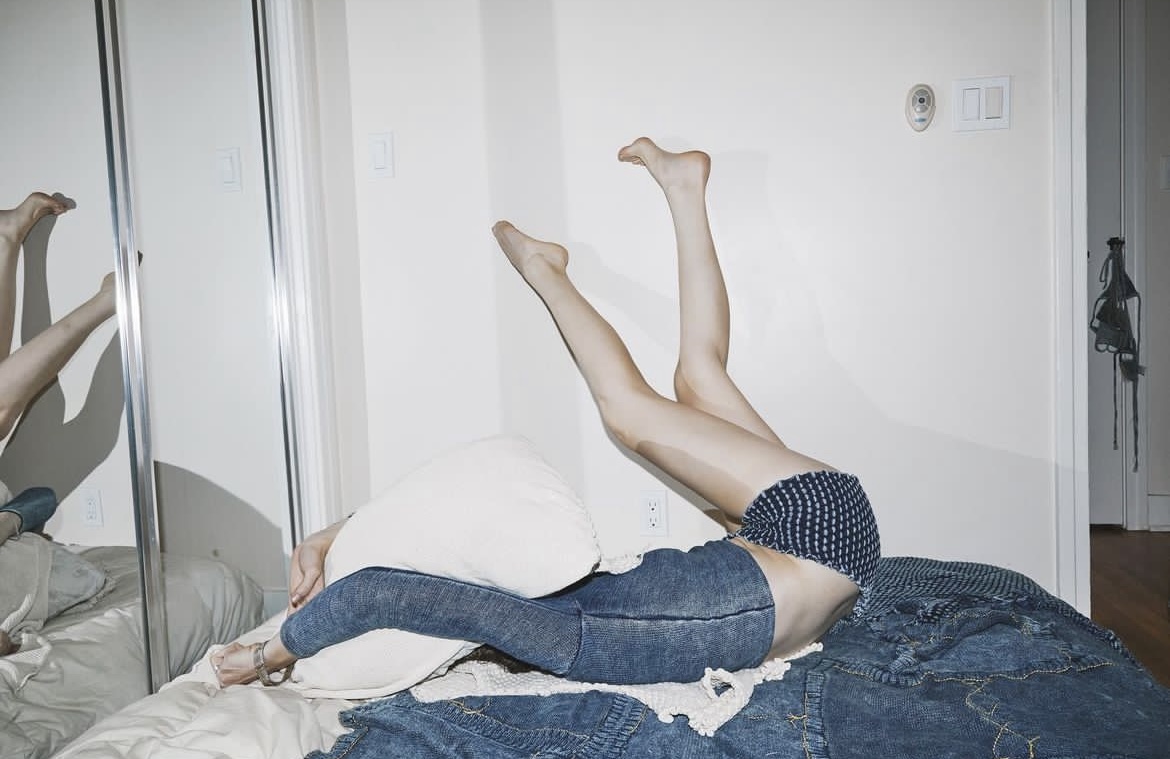
With success came new challenges. As her designs gained popularity, she began to notice that other brands were starting to imitate her approach. Knitwear was becoming more prevalent in the fashion industry, and lower-priced brands were creating designs that looked similar to hers. This influx of similar products threatened to dilute her brand’s unique identity, forcing her to continually evolve. “In order to stand out,” she says, “I need to innovate beyond that original aesthetic. What I’m always working on is how to reinvent myself.”
Rather than being discouraged by the “saturation of her aesthetic”, Eleanore saw this as an opportunity to push her creativity even further. She began experimenting with more original yarn recipes, ways of combining different yarns, knitting techniques, and washes to create new textures and patterns that set her designs apart from the competition. She also learned to adapt her designs to better suit her customer base, moving away from the oversized tops that had been popular in snowboarding culture and towards more fitted silhouettes that her customers preferred. “I learned from stylists,” she adds, “watching them pull outfits that take off inspires me too.”
While it can be tempting to follow trends or chase after the latest fashion fads, she has found that her most successful designs are those that come from a place of authenticity. “Any time I’ve ever tried to include trends into my brand, or design around trends that I see, it’s never served me well” she says. “So I try to stay within my own brain and the yarns and my traditional design process.” Eleanore’s “traditional” process is far from traditional— it changes with each iteration of designs. For her latest season, she’s trying something new for her— a return to Knorts classics. Rather than emphasizing brand new designs, she’s excited to approach silhouettes beloved by Knorts customers with new experiments in forms, finishes, and materials.
Swarmed by collaborations, helming a movement, and fighting off inspired imitators all while still managing the design, production, and finances of her expanding brand, Eleanore approaches the ten-year mark in her fashion journey. One of the most important lessons learned has been the value of maintaining the balance between staying true to her vision and leaving room for flexibility and growth. Her newest collaboration with Urban Outfitters, for example, involves cut-and-sew techniques—a different focus on craftsmanship from the defining fully-fashioned feature of her brand. Another upcoming collaboration (September 19th!) with vintage LA stronghold American Rag further elaborates on the mixing of woven clothes and Knorts knit.
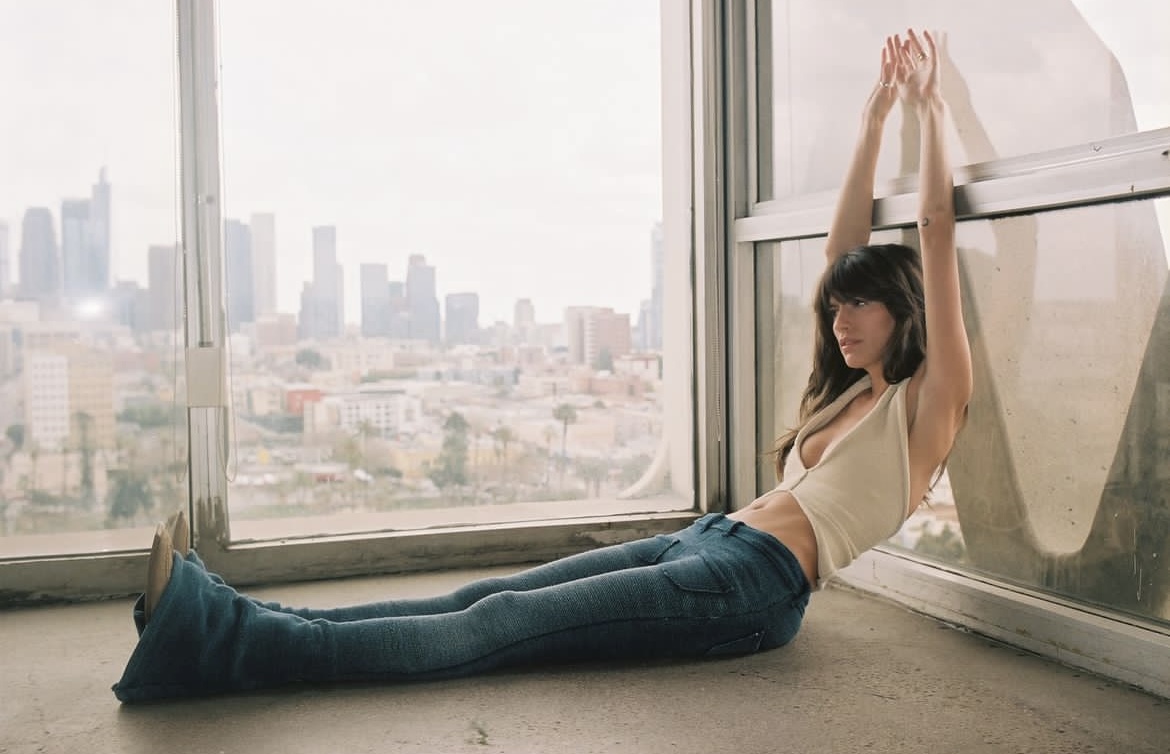
Eleanore’s journey is a testament to the power of perseverance and the importance of staying true to one’s vision. From her early days of hand looming to the acquisition of industrial knitting machines, every step of her journey has been guided by a passion for creation and a desire to bring something new and unique to the fashion world. As she continues to evolve her brand, she remains committed to the principles that have brought her success: innovation, craftsmanship, and an unwavering dedication to her goals.
In the ever-changing world of fashion, where trends come and go with the seasons, Eleanore’s story is a reminder that true success comes not from following convention but from daring to follow your own path. As she looks back on her journey, she can see how every twist and turn has led her to where she is today—a place where her ideas are not just a dream but a reality, woven into the very fabric of the fashion industry.
Looking forward, Eleanore Guthrie is excited about the future of her brand despite an “unclear future” for the industry as a whole. She envisions a world where knit denim is as ubiquitous as traditional denim, a staple in wardrobes around the world. Whether through her own brand or through consulting for other labels, she is committed to continuing to innovate and push the boundaries of what’s possible with denim and with knitwear. “I’ve got a lot of ideas,” she says. “I really, really hope to get those ideas out.”
Leave a Reply