
Vol. 2 coming 2023
Category: Uncategorized
-
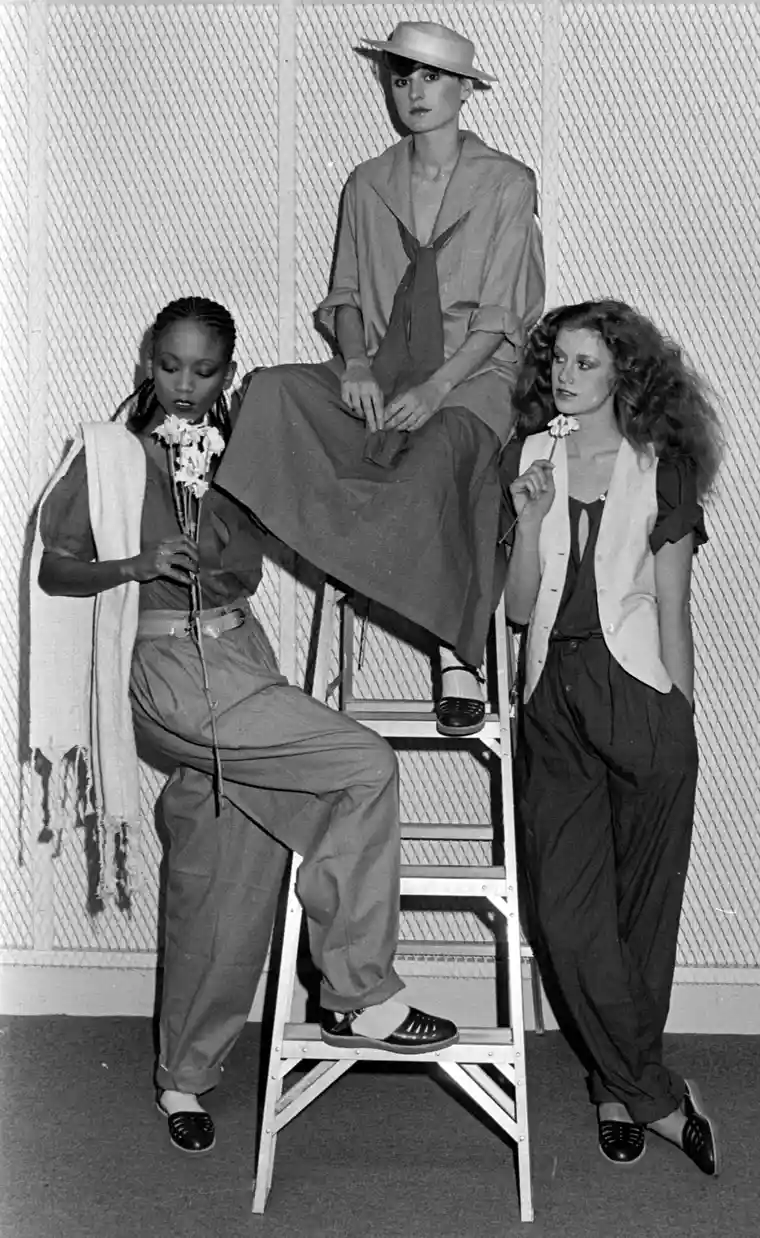
The Founding Father of Street Couture, Willi Smith
The founding father of streetwear, Willi Smith was the most high-profile black fashion designer of the 80s and influenced a generation, yet fashion history has largely forgotten him.
Born in Philadelphia in 1948, he then went to Parsons School of Design on a scholarship in 1965 eventually leading him to an internship with famed couturier Arnold Scaasi. Under Scaasi’s guidance, Smith learned to create high-end tailored garments which he later recalled as “the clothes I didn’t want to make.” He founded Williwear in 1976 and by 1986 Williwear was grossing $25M USD a year.
Smith utilized a simple mantra to explain WilliWear’s creative direction: “I don’t design clothes for the queen, but the people who wave at her as she goes by.”
What really drove him wasn’t ambition but a sense of giving back to his community. What would make him proud was not when a movie star wore his clothes. He would burst with pride when he’d see black kids on the streets running around in his stuff or those black ladies at the bank wearing it to work.
Though New York City inspired him, he wanted people everywhere to appreciate the culture and inspiration of the city. “Being black has a lot to do with my being a good designer. Most of these designers who have to run to Paris for color and fabric combinations should go to church on Sunday in Harlem. It’s all right there.” This philosophy went deep: He loved street culture and made clothes for people to wear on the street. His designs and the collection’s affordable pricing ensured WilliWear an edge unlike any other label of it’s day.
WilliWear AW ‘83, dubbed “Street Couture,” was a prime moment for Smith, as it merged his past inspirations with the explosion of hip-hop. That year, Smith became the youngest-ever winner of the American Fashion Critics’ Award for Women’s Fashion. Smith also broke boundaries when it came to collaborating with artists and creatives.
At the young age of 39 Smith died of pneumonia, complicated by the parasitic disease shigella, which he picked up during a work trip to buy fabric in India. Though at the time of his death, Williwear was making millions and the New York Daily News called him “the most successful black designer in fashion history”, he has now largely been forgotten. What would have happened if he had lived?
-

Nike x Martine Rose Shox
Crossing fashion with sport, London-based designer Martine Rose merges classic formalwear with the renowned look of Nike Shox. Born out of a desire to outfit football in a relevant, elevated and contemporary fashion, it steps beyond boundaries by fusing opposites—the quintessential dress shoe with the fast-paced look of the football boot. Lending her magic to the iconic Shox just as the UEFA Women’s EURO tournament unfolds, Martine Rose introduces the Nike Shox MR4, lifting the columns into a heel, elongating the foot and chiselling the toe for an extra-bold aesthetic that taps into her visionary design language and inclusive, optimistic ethos. Crisp, synthetic leather with embossed padding (and the perfect shine), piping and colour overtly draws from football’s material palate, while the easy-to-slip-on mule design enriches your on-foot experience. The result: a game-winning look that’s as disruptive as it is revolutionary.
Shop the Shox: Martine Rose
-
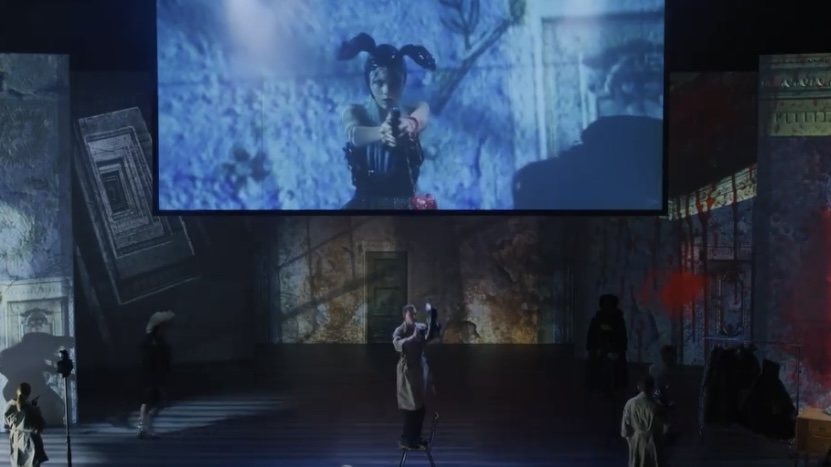
To John Galliano, the traditional runway is an inadequate arena for expressing the intense, allusive narratives which have always fueled his creativity.
Cinema Inferno – Artisanal 2022
Based on an original concept by John Galliano
Adapted for the stage by imitating the dogCreative director John Galliano
Artistic image director Alexis Roche
Adapted for the stage by imitating the dog
Text and direction Pete Brooks & Andrew Quick
Video design Simon Wainwright
Executive producers Julie Brown, Christophe Starkman
Styling Olivier Rizzo
Make up Dame Pat McGrath
Hair Eugene Souleiman
Spectral cowboys’ hats Stephen Jones Millinery
Hats Maison Margiela Artisanal Atelier
Casting Jess Hallett -
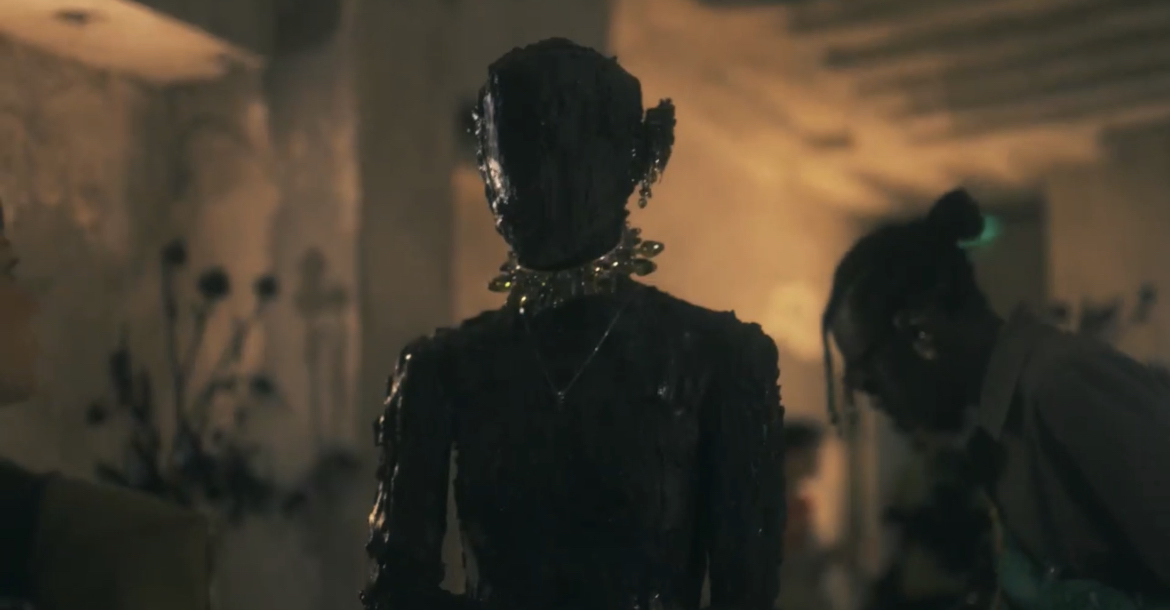
Re: Invitation: Alan Crocetti Deep Fantasy – 25.06.22
‘Deep Fantasy’
The SS23 presentation by Alan Crocetti exuded just that – a deep sensual, romantic, dark jewelry fantasy. Since 2015 Crocetti has designed and crafted timeless pieces for modern times bringing his designs to the center stage literally and figuratively.
Video by Jacob Burkhardt
-
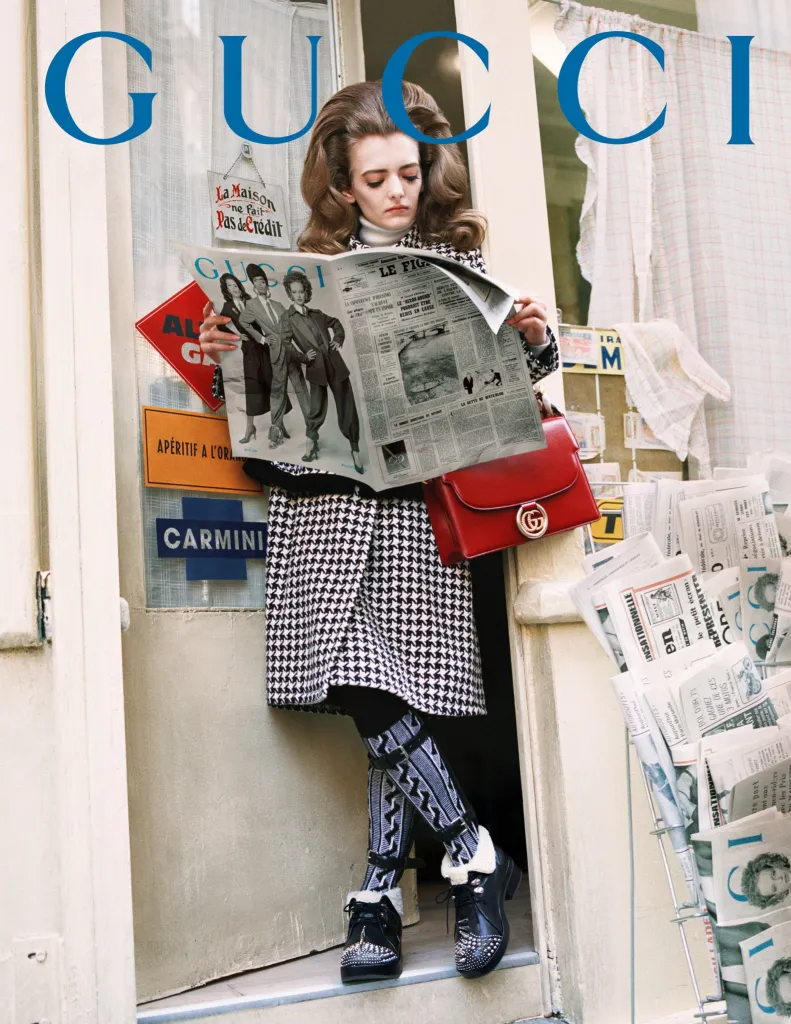
The Gucci vs LVMH battle that ended up in court
If you watched The house of Gucci, you know what happens with the Italian brand at the very end, Domenico De Sole takes the company from the hands of the Gucci family and becomes the CEO of Gucci. But what you don’t know is what happened right after that, Gucci was at its peak, the brand was stable, it was highly profitable. Tom Ford was a creative director, and the Gucci stocks were super high. But even in the midst of this incredible success, Domenico was terrified of someone in particular, Bernard Arnault, the chairman of LVMH, who at the time already owned Louis Vuitton, Dior, Givenchy, Loewe, and Celine and obviously wanted more. Since Gucci was not happy getting acquired Bernard Arnault then went into the stock market and started buying shares of Gucci. He started really small buying only 5% of the company. But when the CEO of Gucci, Domenico got notified about this purchase, he had to do something quick to stop what was coming Gucci’s way he called a Gucci board meeting and they realized that this situation could play out in two different ways. One Arnault would offer a deal to acquire Gucci or he would continue to buy shares on the open market until there were no more Gucci shares left. Well, right after that just two weeks LVMH bought 27% of all Gucci shares after that Bernard called up a meeting with De Sole where he asked De Sole for three seats on the Gucci’s board which De Sole denied. The saga continued and Bernard proceeded to buy 34% of Gucci shares and then Gucci had no choice but to offer Bernard two seats on the board but Bernard rejected the offer and given his influence and his massive stake in the company he called a special meeting with a board members Gucci then finally gave up and offered Bernard to buy the entire company for $85 per share, but Bernard did not take the offer and then De Sole had an idea that would save Gucci from the hands of LVMH. What he did is that he basically diluted all the shareholders of Gucci and created stock that will be awarded to employees. This increased the amount of witches available stock and reduced LVMH ownership of Gucci from 34% to 20%. Needless to say Bernard was furious, but he still thought he had power over Gucci and started a whole new process of negotiations with Gucci. But what he didn’t know is that De Sole was in talks with François-Henri Pinault, the leader of the French luxury conglomerate Kering and then one day despite the negotiations with LVMH, Gucci decided to sell all its 42% equity stakes to Kering for $3 billion. After receiving the news LVMH decided to take Gucci to court and offer an acquisition for $85 per share in wanting to force Gucci to take Bernard’s offer, but Gucci rejected the offer and chose to sell its shares to the Kering group for $75 per share. And then Kering went on to buy the remaining Gucci shares from LVMH for $94 per share. What is funny is that Bernard also tried to acquire Hermes the same way but again, he was not successful that only shows that for years like we know LVMH has been trying to build almost a monopoly in the luxury market.